Most powders, such as solid tone powder colors are usually quite easy to spray. While others such as transparent powders, or other special effect powders have a slight learning curve to them. As with all powders, you should familiarize yourself with each powder's technical data sheet (TDS) which gives specific information that can help you spray and cure the powder correctly. Individual attention should be paid to recommended KV settings, mil thickness, and cure schedule.
It is also recommended that a sample piece be completed before starting any production work.
This not only allows you to see the finish, but also gives you the opportunity to see how the powder sprays and if any application adjustments need to be made.
POWDER COATING TRANSPARENT FINISHES:
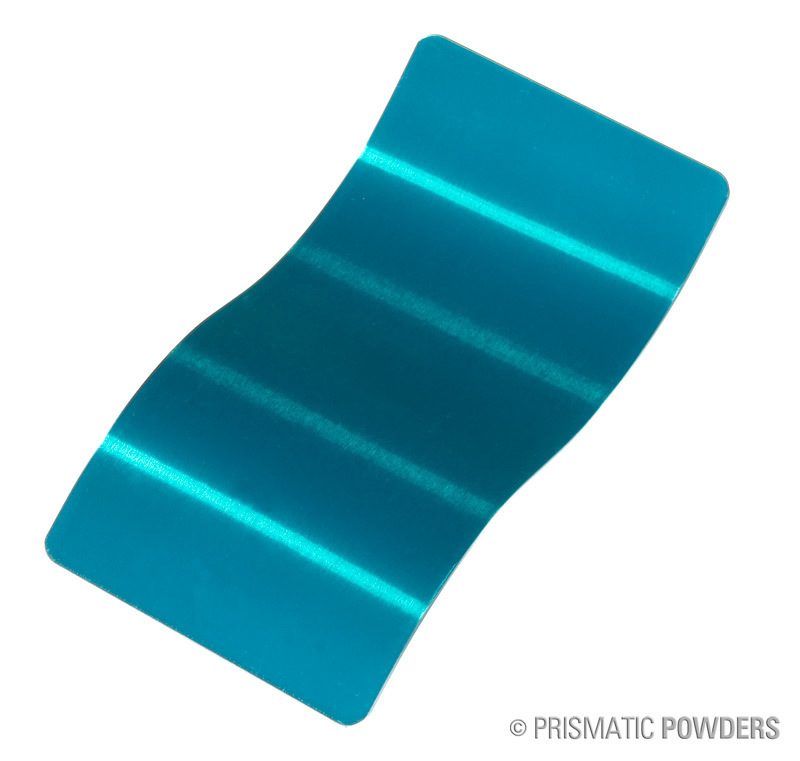
Transparent Finishes, also referred to as Translucent, Candy and Top Coats are tinted clear powder coatings that can be sprayed directly over metal, or over another powder coating to achieve a custom multi coat finish. In either scenario, the transparent finish is transparent and will show what it has been applied over. For example, a transparent color applied over brushed aluminum will show the brightness of the aluminum and the brush marks, while achieving a tinted clear appearance.
After successfully completing a sample piece, make sure you and your customer check the sample piece and agree on the mil thickness and the finish. By checking the sample piece immediately after the powder flows out, it will allow you to inspect the finish for blemishes and inconsistencies. This will also allow you to fix areas with inconsistent color without the need to rework the whole piece.
For those who are somewhat unfamiliar with coating transparent candy colors, it may not be a bad idea to start off easy by building the powder thickness up slowly. This is achieved by maintaining at least an 8-10 inch spraying distance, and by turning down the powder dosage amount. If the coating thickness is too heavy, the color will be excessively dark and unfortunately there is no remedy for that issue other than to start over. If the thickness is too thin, causing the color to be too light there is solutions. Light areas in the coating can be filled in by adding a light dusting of powder to those areas, and then returning the part to the oven to allow the powder to then fully cure. Again, timing is everything! If the part has baked too long, the powder may have gone too far in to the cross-linking process and the fill layers may not melt in to the base coat, which can leave an over spray look. If this should happen, you can remedy it by adding a clear top coat which will conceal the appearance of over spray.
POWDER COATING CLEAR/TRANSPARENT METALLIC FINISHES:
A few important things to remember about heavy metallic powders is that improper voltage (KV) can cause the metallic to behave erratically, so it's important to pay attention to the recommended settings listed on the TDS/Application Guide. Voltage that is too high can cause the metal flake to stand on end, causing a texturing effect. Voltage that is too low may not transfer enough metallic to the part. Again, it's always important to check your work. If you find there is not enough metallic, you may need to increase the voltage, or you can use multiple coats to adjust the metallic content. **method does not work on metallic solid tone powders**
It is highly recommended that you use a powder coating fluidizer when spraying metallic powders.
Related Topics:
Q: Why am I getting orange peel? It looks similar to what is also seen in automotive paint when it's too thick.
A: One cause can be coating thickness. A coating that is built up too heavily or not heavy enough can yield a lumpy inconsistent finish. Another possible cause can happen during the cure cycle if the curing oven cannot heat the powder fast enough to flow out before cross linking (bonding) occurs. The powder will begin to harden or "set" before it can develop a smooth finish. A third possible cause can be the result of over charged powder particles. As charged particles gather in mass, eventually they begin to produce what is called back ionization and begin to push each other apart, which can cause a variety of unwanted issues including a clumpy, orange peel look.